
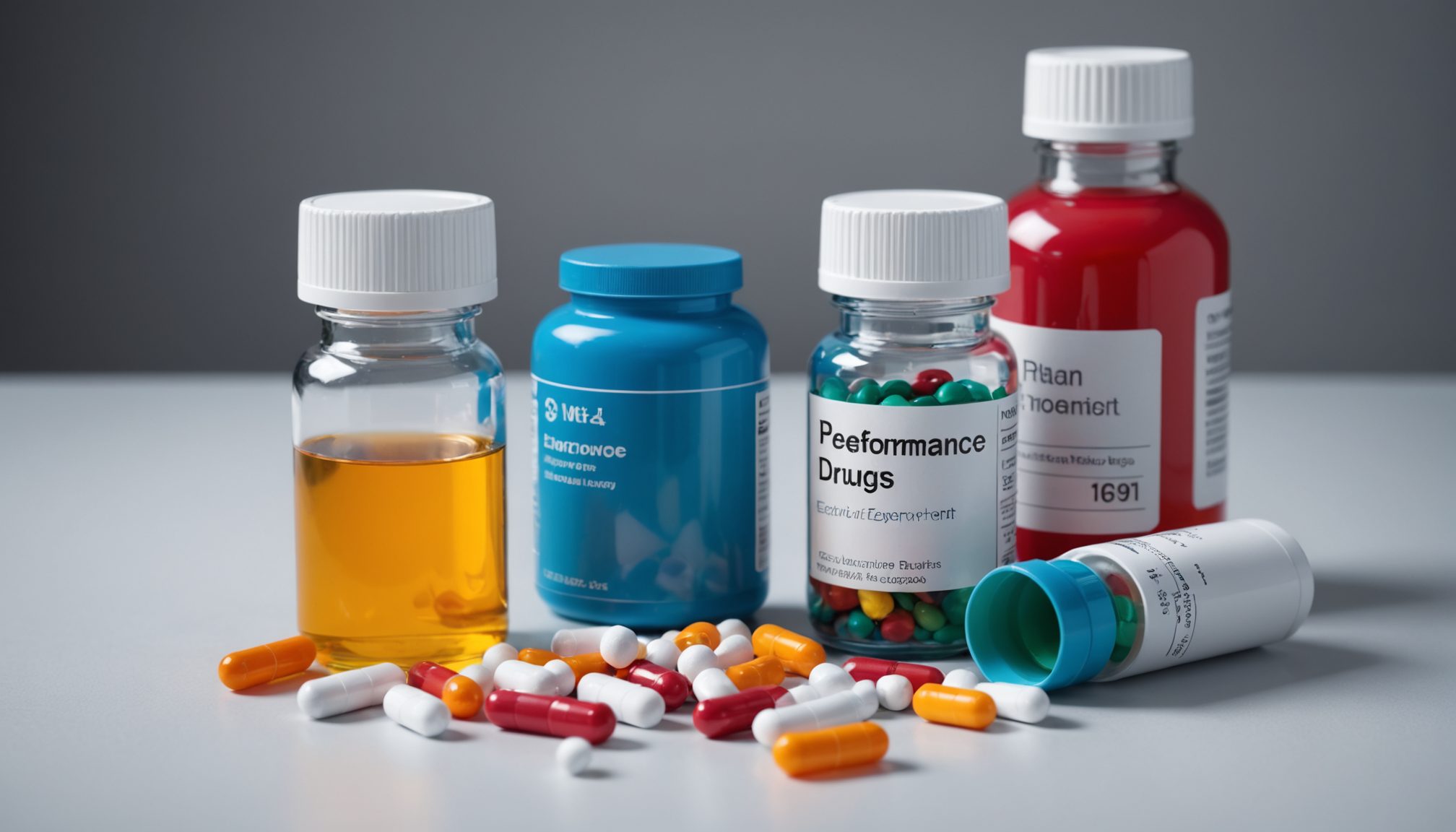
Performance enhancement drugs (PEDs) — medical information, not personal advice
Disclaimer: This article is for educational purposes only. It does not provide personal medical advice, diagnose conditions, or recommend the use of any drug or supplement. Decisions about health or substance use should always be discussed with a qualified healthcare professional.
Quick summary
- Performance enhancement drugs (PEDs) are substances used to improve physical, cognitive, or aesthetic performance.
- Some PEDs have legitimate medical uses, but misuse can lead to serious short‑ and long‑term health risks.
- Evidence strongly links many PEDs to cardiovascular, hormonal, liver, and mental health problems.
- Benefits are often overstated, while risks are underestimated in non‑medical settings.
- Research quality varies: some effects are well documented, others remain uncertain.
What is known
What are performance enhancement drugs?
Performance enhancement drugs are a broad group of substances used to improve strength, endurance, focus, reaction time, or appearance. They are commonly associated with sports, bodybuilding, academics, and certain high‑pressure professions.
Major categories include:
- Anabolic‑androgenic steroids (AAS) – synthetic forms of testosterone
- Stimulants – such as amphetamines or certain prescription ADHD medications
- Hormones and hormone modulators – including growth hormone and erythropoietin (EPO)
- Beta‑2 agonists and other metabolic agents
Documented physical effects
High‑quality studies and clinical reports show that many PEDs can temporarily improve specific performance metrics, such as muscle mass or alertness. However, these effects are often accompanied by physiological strain.
Well‑established risks include:
- Increased blood pressure and abnormal heart rhythms
- Liver injury, especially with oral anabolic steroids
- Hormonal suppression, infertility, and sexual dysfunction
- Tendon injuries due to muscle growth outpacing connective tissue strength
Mental and behavioral effects
Evidence from observational studies and case reports links certain PEDs to psychological changes. These may include mood swings, anxiety, irritability, sleep disturbances, and in some cases aggressive or impulsive behavior.
Dependence and withdrawal symptoms have been documented, particularly with long‑term or high‑dose use.
Use outside of elite sports
While anti‑doping discussions often focus on professional athletes, research shows widespread use among recreational gym users, students, and non‑athletes seeking competitive or cosmetic advantages.
This mirrors patterns seen in other risk‑related behaviors discussed in broader public‑interest topics such as online risk‑taking environments or performance pressure in competitive settings.
What is unclear / where evidence is limited
Despite decades of research, important gaps remain:
- Long‑term outcomes: Many users cycle PEDs, making lifetime risk hard to measure.
- Low‑dose or intermittent use: Most studies examine high or chronic exposure.
- Combined substances: Users often stack multiple drugs, but evidence usually focuses on single agents.
- Cognitive enhancement: Benefits for learning or intelligence are inconsistent and often modest.
Self‑reported data and underground drug markets further complicate research quality, meaning some claims—both positive and negative—remain uncertain.
Overview of approaches
From a medical perspective, substances sometimes labeled as PEDs fall into two very different contexts:
Clinically supervised use
Certain drugs (for example, testosterone, stimulants, or growth hormone) have approved medical indications. When prescribed, dosing, monitoring, and risk‑benefit analysis are based on clinical guidelines and patient‑specific factors.
Official information can be found through government or regulatory agencies such as the FDA or EMA.
Non‑medical or recreational use
Outside clinical settings, PED use is typically unsupervised. Products may be counterfeit, contaminated, or inaccurately labeled. This significantly increases health risks.
Unlike regulated activities reviewed in areas such as platform legitimacy assessments or consumer safety reviews, informal PED markets lack transparency and oversight.
Non‑drug alternatives
Strong evidence supports safer performance‑supporting strategies, including structured training, adequate sleep, nutrition, psychological skills training, and recovery planning.
Evidence snapshot
| Statement | Confidence level | Why |
|---|---|---|
| Anabolic steroids increase muscle mass | High | Consistent randomized trials and clinical observations |
| PEDs significantly improve long‑term athletic success | Low | Limited long‑term outcome data and many confounders |
| PED use increases cardiovascular risk | High | Strong epidemiological and mechanistic evidence |
| Cognitive enhancers dramatically boost intelligence | Low | Small, inconsistent effects in controlled studies |
Practical recommendations
General safety principles
- Avoid unsupervised use of prescription or illicit substances.
- Be cautious of online claims promising “safe” or “natural” performance boosts.
- Remember that absence of immediate side effects does not mean absence of harm.
When to see a doctor
- Symptoms such as chest pain, shortness of breath, mood changes, or hormonal issues
- A history of PED use with new or unexplained health problems
- Considering stopping long‑term use and concerned about withdrawal effects
Preparing for a medical consultation
- List all substances used, including supplements and timing (honesty matters).
- Note physical or mental changes, even if they seem minor.
- Ask about evidence‑based alternatives to reach performance goals safely.
Sources
- World Anti‑Doping Agency (WADA): Health risks of doping substances
- U.S. Food and Drug Administration (FDA): Prescription drug safety communications
- Endocrine Society Clinical Practice Guidelines
- National Institute on Drug Abuse (NIDA): Anabolic steroid misuse
- British Journal of Sports Medicine: Reviews on performance‑enhancing drugs
